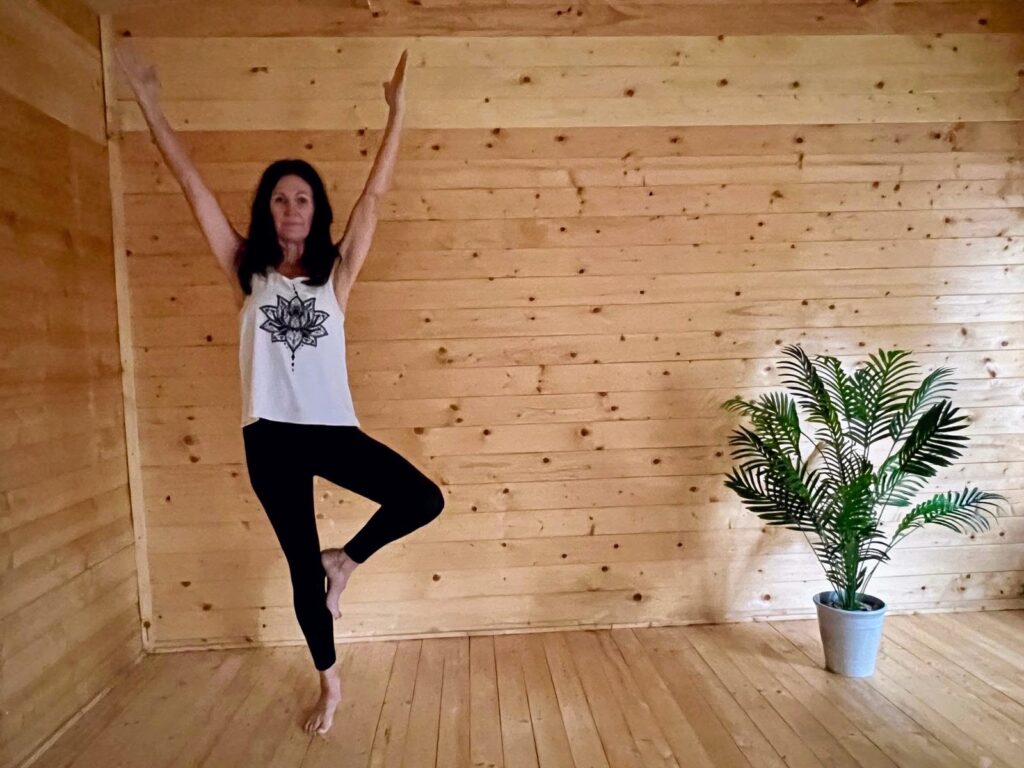
I was teaching my beginners course last week, and as is often the case in all classes, we were all wobbling around in Tree pose. Legs shaking, arms flailing, trying to find a still point that seemed impossible. It’s easy to get frustrated when you’re new to balancing (and sometimes even when you’re not new – sometimes it’s just not a balancing day!) – I could see it in people’s faces: that familiar thought, why am I even doing this?
Yoga is never just about the poses themselves. We don’t practice Tree pose simply to stand on one leg; we practice it for what it gives us off the mat.
Yes, it strengthens your hips and improves balance — but those benefits show up in everyday life too. They help you walk down stairs without feeling like a tightrope walker, stand steady on slippery surfaces, or even put your socks on without toppling over. That small wobble on the mat translates into confidence in movement off it, giving you stability in moments you might never think about while practicing.
Warrior poses aren’t just about striking a strong, dramatic stance. They build leg and core strength, improve posture, and enhance focus. Off the mat, this means carrying the shopping bags without grimacing, climbing stairs without huffing, or reaching for the top shelf in your kitchen without doing a contortionist move. It’s the strength you don’t always notice — until you need it.
Forward folds are often disliked because they require bending and flexibility. But they’re doing essential work behind the scenes, keeping your hamstrings and lower back loose. This flexibility makes everyday movements — like picking up toys, bending to tie your shoes, reaching under the couch for a stray sock, or even giving someone a low hug — easier and less stiff.
Twists improve spinal mobility and encourage digestion, but they also help in more practical ways: reaching for something behind you in the car, looking over your shoulder safely while cycling or walking, or simply sitting comfortably at your desk for long periods without tension.
Even balancing poses on one leg, like Dancer pose, may feel impossible at first. But the tiny gains in ankle, knee, and hip stability ripple into life outside the studio. You might find yourself walking on uneven pavement without wobbling, hopping over a puddle with ease, bending to tie your child’s shoelaces, or picking up the dog without losing your footing.
And that’s just the physical side of yoga! Yoga also teaches patience, resilience, and focus. Mindfulness on the mat translates to better presence at work, more patience with loved ones, and the ability to navigate life’s challenges with steadier footing and clearer thinking. The calm you cultivate in Savasana is the calm that helps you breathe through a stressful meeting, a fussy toddler, or a crowded commute. This is a whole blog in itself for another day!
So the next time you’re wobbling in Tree pose, frustrated and questioning what it’s for, remember: you’re not practicing for the sake of standing on one leg. Yoga isn’t just what happens on the mat — it’s how it empowers us beyond it. Every wobble, shake, and fall is just another reminder that the work we do on the mat has a purpose far greater than the pose itself.
Michelle x
Leave a Reply